本节用于介绍应用层和内核层数据传输
Linux一切皆文件!
文件对应的操作有打开,关闭,读写
设备节点对应的操作有打开,关闭,读写
1、如果我在应用层使用系统IO对设备节点进行打开,关闭,读写等操作会发生什么呢?
首先看一下文件操作集结构体,下面先选取我们常用的一部分
文件位置:include/linux/fs.h
1
2
3
4
5
6
7
8
9
10
11
12
13
14
15
16
| struct file_operations {
struct module *owner;
ssize_t (*read) (struct file *, char __user *, size_t, loff_t *);
ssize_t (*write) (struct file *, const char __user *, size_t, loff_t *);
unsigned int (*poll) (struct file *, struct poll_table_struct *);
long (*compat_ioctl) (struct file *, unsigned int, unsigned long);
int (*open) (struct inode *, struct file *);
int (*release) (struct inode *, struct file *);
...
}
|
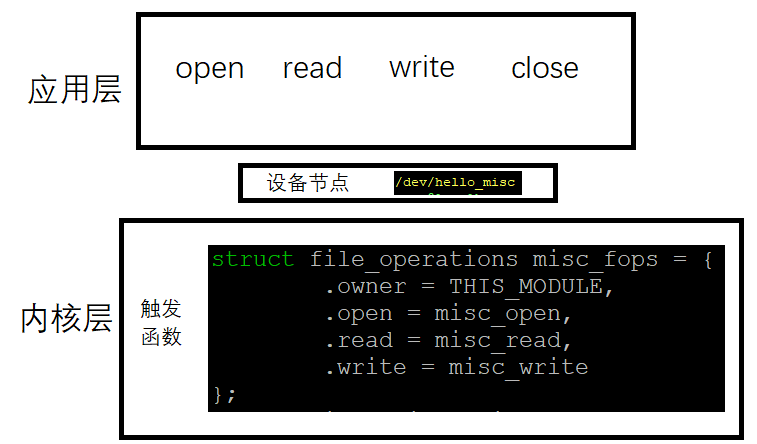
通过框图我们知道,设备节点用于连接应用层和内核层
2、假如我们的file_operations里面没有read,我们在应用层read设备节点的时候会发生什么?
什么也不会发生,也不会报错!
3、我们的应用层和内核层是不能直接进行数据传输的。
文件位置:include/linux/uaccess.h
1
2
3
4
5
|
static __always_inline unsigned long __must_check copy_to_user(void __user *to, const void *from, unsigned long n)
static __always_inline unsigned long __must_check copy_from_user(void *to, const void __user *from, unsigned long n)
|